Thursday, 27 August 2015

Reflection(1)


Reflection on :


Taylor's Graduate Capabilities (TGC)

Throughout the first class, we discussed about what is meant by TGC. TGC is actually the abilities that need to or are encouraged to be possessed by students at college or after graduating from an educational institution. These abilities can strongly strengthen a person, or in a more detailed way, a graduate's capability of getting their dream job. After comprehending what is taught in class, I found that there are many, many skills that I am lack of. One of the most significant skills is thinking and problem solving skills. The reason I say that is the most inadequate skill that I possess is because when we've started our pre-university, the learning styles are distinctly different from what we had in our secondary level. College studies usually require students to have a wider,or a more creative thinking compared to in secondary schools. Therefore, it is very important for me to start adapting to this new environment and stop the 'spoon-fed theory'. Furthermore, problem solving skills are important when we want to pursue our higher education and when looking for a job after graduating. It is a universal skill and is applicable in many diverse conditions. By possessing this skill, I will be able to think and act fast when I encounter a particular circumstance in my future.

Goal Setting

Knowing what a person's ultimate goal is important, because it helps to sort out his or her strength and weaknesses. I learnt how to set my goal and how to discover my inner strength and weaknesses through this programme. There are 5 utmost important aspects mentioned in the previous classes: specific, measurable, attainable, relevant and time bound. After knowing these five aspects, I can now create and specify my own goal, without having any doubts. Goal setting helps me in planning and achieving my goal, whether it is a minute goal, or a significant goal, it is thought to be useful in various situations.

Personality Test

I have done many different kinds of personality test before, and in the recent tests, I found out that I am a ultimate introvert. That suites me because I like to have more personal space, for example, studying alone in a quiet room or doing things individually. But in my opinion, personality test is not just about discovering what kind of person you are, it is a definition or an expression on what you need to improve on, or rather than that, which aspects do you have to overcome to improve your life and your role in a community. There are various types of personality tests that I can find online, one of them is the one that I think is more extraordinary is the one that I have posted on my blog. It clearly analyses what kind of personality I have, and line out what are deep inside me. I found it useful and practical, as I now realize what type of person am I and what should I do to improve on my shortcoming, for instance, communicate and interact more with people around me and don't be shy- don't stay in my own shell and as an introvert anymore!

SWOT Analysis  

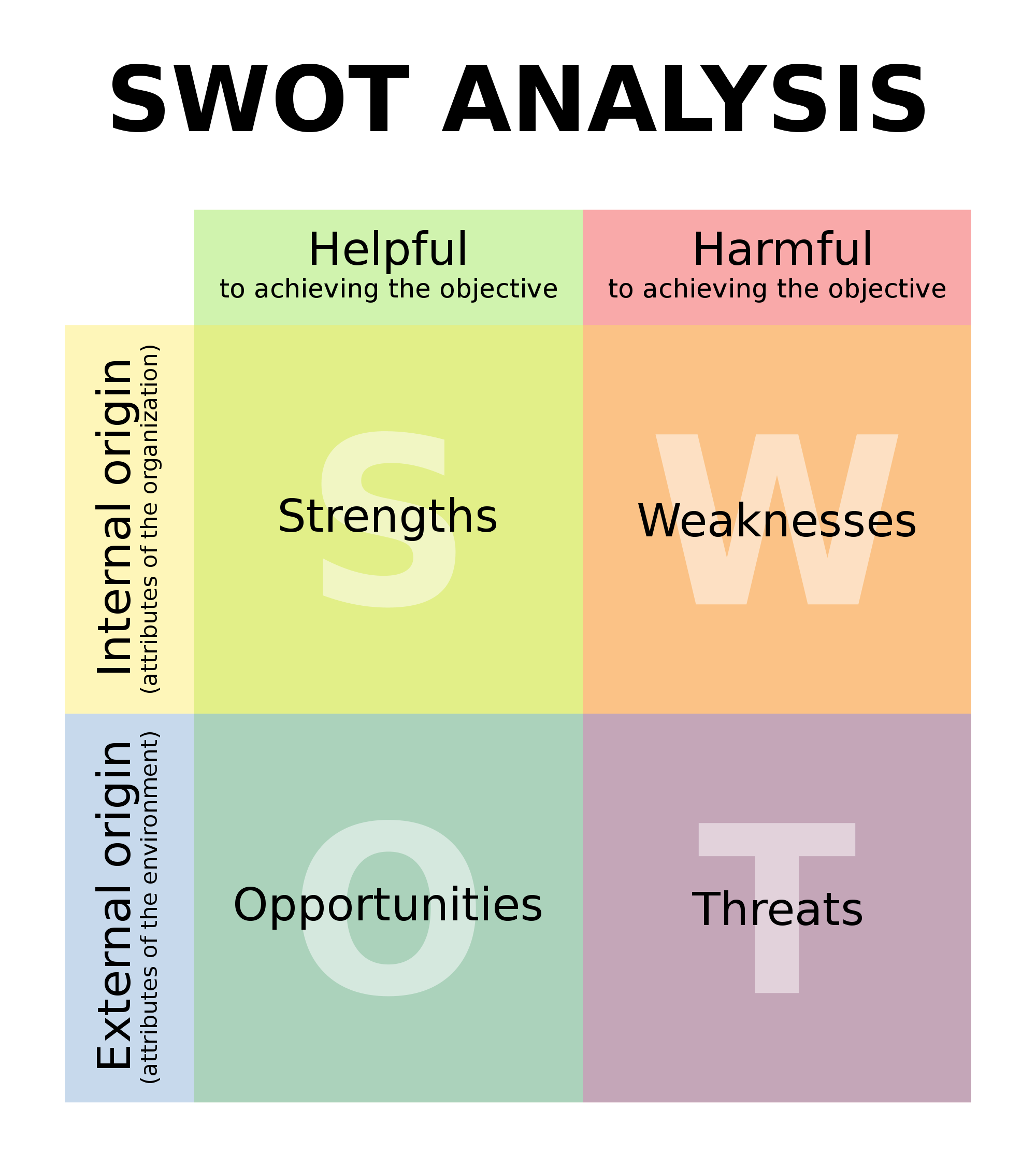
SWOT analysis clearly outlined the internal and external factors surrounding me, such as my strengths and weaknesses; opportunities and threats. This fractionization of factors helped me in identifying what I have and what I lack, and these in turn help me to analyze what barrier I have to overcome to reach success. The barriers that hold me back are basically the lack of communication with unfamiliar people, and the lack of courage to speak in public. Therefore, I have to work hard on improving my public speaking ability. Other than that, I have to mix more with different personalities to recognize and know more about people around me.

Career Test

After conducting the career test, I found out that my future possible careers are exactly (or nearly) similar to what I aim for. After a series of analyzation, it says that careers that suit me are scientist, research department managers, university instructors, professors/teachers, medical doctors, etc. I was fond of the word ‘scientist’ when I first saw it. It is exactly what I want to be! Although I don’t really want to be called ‘scientist’, but I want to be someone who can discover new things in the field of science! That is because I really enjoy researching and discovering something that is yet to be discover, something that is still in mist, and I hope it will be able to bring a positive change to this world by discovering something beneficial not only to human, but other living things as well.  


Monday, 24 August 2015

Career Test Results

Personality Types
Your results with percentage breakdown
Percentage breakdown of your results:
Introverted (I) 96% Extraverted (E) 4% Intuitive (N) 59% Sensing (S) 41%
Thinking (T) 55%Feeling (F) 45%
Judging (J) 59%Perceiving (P) 41%
INTJ – Scientists and Strategists
Career relevant traits:
• Can absorb highly complex theories and material
• Strive to create structure from theoretical abstractions
• Brilliant strategists
• Strong insights and intuitions, which are trusted implicitly
• Enjoy difficult theoretical challenges
• Bored with mundane routine tasks
• Calm, collected and analytical
• Very logical and rational
• Original, creative, independent, ingenious and resourceful
• Natural leader, but will follow if you can fully support the person and plans
• Prefer to work alone and better at doing so.

More than the other personality types, you are brilliant at grasping complex concepts and applying them to problems to create with long-term strategies. Since this type of "strategizing" is your central focus and drive, there is a good match between desire and ability. Being an INTJ you will be happy and most effective in careers which allow this type of processing, and which promote an environment in which you are given a lot of autonomy over your work and life.
You dislike messiness and inefficiency, and anything that is muddled or unclear. You value clarity and efficiency, and will put enormous amounts of energy and time into consolidating your insights into structured patterns.
Other people may find you reserved and at times detached. It is not that you are without caring, but just that you don’t need, or have the desire to express it, or receive it as much as other personalty types. People may incorrectly believe you are rigid or set in your ways, but this is far from the truth, as you seek ways to implement the best strategies for your ideas and are quite open to hearing an alternative way of doing something.
As an INTJ, you are an ambitious, self-confident, deliberate, long-range thinker. Like other INTJs you could well end up in engineering or scientific pursuits, although some find enough challenge within the business world in areas which involve organizing and strategic planning.

Possible Career Paths for the INTJ:
• Scientists
• Research department managers
• University instructors
• Engineers
• Professors and Teachers
• Medical Doctors or Dentists
• Psychologists
• Corporate Strategists and Organization Builders
• Business Administrators and Managers
• Military Leaders
• Lawyers
• Judges
• Computer programmers/specialists, or Systems Analysts


--------------------------------------------------------------------------------------------------------------------------

The results obtained are quite accurate and fit my future career pathway that I want to pursue.
My ambition is to become a lab technologist, and that fits perfectly with the term "scientists" listed above. I am more towards the introvert side because I like to work alone in a quiet environment.
Other than that, my intuitive and sensing abilities are fairly equal. However, I do feel that sometimes I feel more on a particular subject more than I think. So for this part, the results are not really accurate for me. But overall, the career pathways that are shown above fits me.


Monday, 17 August 2015

SWOT in Studies

SWOT can be applied into our daily lives. As a student, I can make use of SWOT in my studies.

The major elements @ SWOT :

My Strength

-  I can understand what is taught in class. I am comprehensive.
-  I like to make notes after revising a chapter.
-  I like to look for extra information on the topic that I'm interested in. I am competitive.
-  I always study the chapter before it is taught.
-  I always take time to revise what has been taught in class.
-  I ask questions in class.
-  I am able to study on my own.

My Weaknesses

-  I will procrastinate.
-  I couldn't manage time well.
-  I lack problem solving skills.
-  I couldn't think fast.
-  I take a long time to memorise/remember the facts.
-  I have poor practical skills.
-  I am not good in IT.

Opportunities :
I will ask questions whenever I don't understand a particular topic.
-  I can have group study with my friends.
-  I will read more books on the subject that I'm weaker in.
-  I will pay more attention in class.
-  I will use my free time to revise on previous chapter.
-  I will do more HOTS questions.
-  I will learn some useful IT skills from my classmates.

Threats :

-  I don't feel motivated.
-  I am easily distracted by external influences.
-  I can't decide what is prior to do.
-  I can mess up things when there is too many at once.
-  I find it difficult to balance between family demands and studies.
-  I feel stressful.
-  I can lose self-confidence.

By fractionising all the 4 aspects of SWOT, I am able to sort out what are my strengths and weaknesses. Knowing these could help me to visualise the path that I must follow in order to achieve my goals. For example, one of my strength is I am competitive. Therefore I can make use of this strength that I have to improve my knowledge on the subjects that I am currently studying. Besides, knowing my weaknesses is also important because it helps me to understand and analyse what I should do to eliminate my weaknesses. For example, I couldn't manage time well. Therefore, I will try making a timetable to maximise the use of essential time.  doing this, I can gradually overcome my shortcoming by looking an alternative pathway to it.

SWOT ANALYSIS

What is SWOT Analysis?


Wednesday, 12 August 2015

My Results

http://homeworktips.about.com/library/quizzes/bltypea.htm


You are a very visual learner.

You probably use visual references a lot and say things like "I see now" or "I get the picture." You like to see demonstrations, diagrams, slides, charts, and other visual aids in the classroom. You take great notes and you probably use color coded highlighting. You could benefit by drawing outlines of your notes and creating pictures of processes or events that you study. Always write down explanations and instructions. Use flash cards when available.

VAK Learning Styles

ABOUT VAK

The VAK learning style uses the three main sensory receivers: Visual, Auditory, and Kinesthetic (movement) to determine the dominant learning style. It is sometimes known as VAKT (Visual, Auditory, Kinesthetic, & Tactile). It is based on modalities—channels by which human expression can take place and is composed of a combination of perception and memory.
VAK is derived from the accelerated learning world and seems to be about the most popular model nowadays due to its simplicity. While the research has shown a connection with modalities and learning styles (University of Pennsylvania, 2009), the research has so far been unable to prove the using one's learning style provides the best means for learning a task or subject. This is probably because it is more of a preference, rather than a style.


Visual Learner Characteristics

Visual learners are those who learn through seeing things. Look over the characteristics below to see if they sound familiar. A visual learner:
  • Is good at spelling but forgets names.
  • Needs quiet study time.
  • Has to think awhile before understanding lecture.
  • Is good at spelling.
  • Likes colors & fashion.
  • Dreams in color.
  • Understands/likes charts.
  • Is good with sign language.
Learning Suggestions for Visual Learners
  • Draw a map of events in history or draw scientific process.
  • Make outlines of everything!
  • Copy what's on the board.
  • Ask the teacher to diagram.
  • Diagram sentences!
  • Take notes, make lists.
  • Watch videos.
  • Color code words, research notes.
  • Outline reading.
  • Use flashcards.
  • Use highlighters, circle words, underline.
Best Test Type for Visual Learners:
Diagramming, reading maps, essays (if you've studied using an outline), showing a process


Worst test type:
Listen and respond tests


Auditory Learner Characteristics


Auditory learners are those who learn best through hearing things. Look over these traits to see if they sound familiar to you. You may be an auditory learner if you are someone who:
  • Likes to read to self out loud.
  • Is not afraid to speak in class.
  • Likes oral reports.
  • Is good at explaining.
  • Remembers names.
  • Notices sound effects in movies.
  • Enjoys music.
  • Is good at grammar and foreign language.
  • Reads slowly.
  • Follows spoken directions well.
  • Can't keep quiet for long periods.
  • Enjoys acting, being on stage.
  • Is good in study groups.
Auditory Learners Can Benefit from:
  • Using word association to remember facts and lines.
  • Recording lectures.
  • Watching videos.
  • Repeating facts with eyes closed.
  • Participating in group discussions.
  • Using audiotapes for language practice.
  • Taping notes after writing them.
Worst test type:
Reading passages and writing answers about them in a timed test.
Best test type:
Auditory Learners are good at writing responses to lectures they've heard. They're also good at oral exams.


Kinesthetic Learner Characteristics


Kinesthetic learners are those who learn through experiencing/doing things. Look over these traits to see if they sound familiar to you. You may be a kinesthetic learner if you are someone who:
  • Is good at sports.
  • Can't sit still for long.
  • Is not great at spelling.
  • Does not have great handwriting.
  • Likes science lab.
  • Studies with loud music on.
  • Likes adventure books, movies.
  • Likes role playing.
  • Takes breaks when studying.
  • Builds models.
  • Is involved in martial arts, dance.
  • Is fidgety during lectures.
Kinesthetic Learners Can Benefit from:
  • Studying in short blocks.
  • Taking lab classes.
  • Role playing.
  • Taking field trips, visiting museums.
  • Studying with others.
  • Using memory games.
  • Using flash cards to memorize.<.li>
Worst Test Type:
Long tests, essays.
Best Test Type:
Short definitions, fill-ins, multiple choice.


Monday, 10 August 2015

Personality Test

http://www.truity.com/personality-test/test-results/1396425


Section I: Your Dimension Results

This section will explain how you scored on each of the four dimensions of personality.


You Are an Introvert

Your energy style is Introversion (in contrast with Extraversion). This dimension describes how you manage your energy.
Introverts are energized by being quiet, reflective, and calm. They maintain a distance from the outside world and prefer to conserve their energy rather than expend a lot of effort seeking excitement. They enjoy:
  • Contemplating ideas and experiences
  • Being in calm surroundings
  • Exploring a subject in depth
  • Reflecting on thoughts or feelings
  • Maintaining distance and privacy
  • Quiet and solitude

You May Be an Intuitive or a Sensor

Your score was right on the borderline for the Intuition vs. Sensing dimension. We can't say for sure what your style is for this dimension of personality.
This dimension describes how you process information. Have a look at both styles below, and see if you can get a sense of which describes you best.
Sensors process information in a concrete, realistic way. They focus on observing and recalling facts, experiences, and details. They like to focus on:
  • Observing sights, sounds, sensations
  • Noticing details
  • Experiencing the present moment
  • Concrete, provable facts
  • Realism and practicality
  • Knowledge from past experience
Intuitives process information in an abstract, imaginative way. They focus on ideas and concepts that cannot be directly observed. They like to focus on:
  • Observing patterns and connections
  • Interpreting meaning
  • Imagining potential
  • Ideas and concepts
  • Innovation and creativity
  • Possibilities for the future


You May Be a Feeler or a Thinker


Your score was right on the borderline for the Thinking vs. Feeling dimension. We can't say for sure what your style is for this dimension of personality.
This dimension describes your orientation to personal values. Have a look at both styles below, and see if you can get a sense of which is a better fit.
Feelers value empathy, cooperation and compassion. They believe that everyone has a responsibility to take care of those around them. They are concerned with:
  • Acting out their ideals
  • Engaging their emotions
  • Considering the impact on people
  • Seeking harmony and appreciation
  • Serving others
  • Making authentic decisions
Thinkers value logic, competence, and objectivity. They believe that every person has a responsibility to take care of him or herself. They are concerned with:
  • Using logical reasoning
  • Being unbiased and impartial
  • Considering costs and benefits
  • Seeking consistency and justice
  • Keeping a competitive edge
  • Making objective decisions


You Are a Judger

Your self-management style is Judging (in contrast with Perceiving). This dimension describes how you organize your life. Judgers like structure and order. They keep organized and plan ahead, resist distractions, and stay focused on their goals. They prefer to:
  • Create a plan and stick to it
  • See a task through to completion
  • Adhere to a schedule
  • Set goals and maintain focus
  • Follow rules and regulations
  • Set clear expectations


Section II: Your Personality Type

This section will show you how your four dimension results combine to create your personality type.


Discovering Your Personality Type

Your personality type code is based on the combination of your results for the four dimensions of personality. Because we are not sure of your styles on all of the dimensions, we are not sure of your four-letter code. We will show you all the personality types that may fit you, and it is up to you to decide which describes you best.
Below you will find profiles for each of the personality types that you should consider. Read over each of them carefully and think about which fits you best. You may see some of yourself in all of them, and none of them may fit you exactly. However, try to think about which comes the closest to describing you. If you can find a profile that is about 90% accurate or better, that is likely to be your personality type.


Your possible personality types:


INFJ: The Counselor


INFJ in a Nutshell

INFJs are creative nurturers with a strong sense of personal integrity and a drive to help others realize their potential. Creative and dedicated, they have a talent for helping others with original solutions to their personal challenges.
The Counselor has a unique ability to intuit others' emotions and motivations, and will often know how someone else is feeling before that person knows it himself. They trust their insights about others and have strong faith in their ability to read people. Although they are sensitive, they are also reserved; the INFJ is a private sort, and is selective about sharing intimate thoughts and feelings.


INTJ: The Mastermind


INTJ in a Nutshell

INTJs are analytical problem-solvers, eager to improve systems and processes with their innovative ideas. They have a talent for seeing possibilities for improvement, whether at work, at home, or in themselves.
Often intellectual, INTJs enjoy logical reasoning and complex problem-solving. They approach life by analyzing the theory behind what they see, and are typically focused inward, on their own thoughtful study of the world around them. INTJs are drawn to logical systems and are much less comfortable with the unpredictable nature of other people and their emotions. They are typically independent and selective about their relationships, preferring to associate with people who they find intellectually stimulating.


ISFJ: The Protector


ISFJ in a Nutshell

ISFJs are industrious caretakers, loyal to traditions and organizations. They are practical, compassionate, and caring, and are motivated to provide for others and protect them from the perils of life.
ISFJs are conventional and grounded, and enjoy contributing to established structures of society. They are steady and committed workers with a deep sense of responsibility to others. They focus on fulfilling their duties, particularly when they are taking care of the needs of other people. They want others to know that they are reliable and can be trusted to do what is expected of them. They are conscientious and methodical, and persist until the job is done.


ISTJ: The Inspector


ISTJ in a Nutshell

ISTJs are responsible organizers, driven to create and enforce order within systems and institutions. They are neat and orderly, inside and out, and tend to have a procedure for everything they do. Reliable and dutiful, ISTJs want to uphold tradition and follow regulations.
ISTJs are steady, productive contributors. Although they are Introverted, ISTJs are rarely isolated; typical ISTJs know just where they belong in life, and want to understand how they can participate in established organizations and systems. They concern themselves with maintaing the social order and making sure that standards are met.

Sunday, 9 August 2015

GOAL SETTING

                                     smart goal setting concept

To begin with...

In order to achieve a certain goal, there are some important aspects that we should always look into. The 5 main aspects are outlined below.


Knowing what you are planning to accomplish is an important and specific task. Firstly you will have to determine what you really want, not something that is irrelevant or impossible to be achieved. Therefore, specificity is very important in setting a goal for yourself. For example, I will write down something that is more specific rather than general, like "I want to well-rounded" compared to "I want to achieve good results and be more active by participating in more college activities". Specificity is therefore very important in paving a route towards success.


The result or progress of the process must be measurable. We cannot see how far we have reached after a period of time if it cannot be measured quantitatively. For example, we might measure the time or period taken in order to know that we have reached a certain level of the progress. I might measure the time taken for me to finish a particular task or project, or I might set a time limit for me to accomplish it in the fixed timeframe.


Besides, we must consider whether the goal we're going to accomplish is truly attainable. Is it really possible to master it? Is it logical literally? We must be certain that what we're planning to achieve is realistic, that is possible to come true if we work hard on it. For example, I understand that to achieve outstanding results is not impossible, it is attainable, if I really put effort in it. Goals like 'I want to be rich in a day' or 'I want to be smart in a week' is impossible to be achieved.


 Goals must be relevant. We must work on what really makes up our dream, not something that is not related to it. Sometimes, I will ask myself : Am I doing it the right way? Am I doing something that helps to support my ultimate goal onto a higher level? For example, I know my goal is to master my studies, so what I actually must possess is the compassion towards what I want.


Lastly, goals must be time-bound. We must always set a goal in a known period of time, in order to know where do we stand and what we have achieved in that fixed time. As an example, I can set my time as 1 year, so that after one year, I know how far have I reached. This helps to determine my progress as time proceeds.


Wednesday, 5 August 2015

A little about me~:D

Hello, my name is Jia Qi, currently studying A-Levels at Taylor's College. My former school was SMK USJ 12, which is also located in Subang Jaya. Why do I choose to study A-Levels out of so many pre university programmes? Well, that's because I think that A-Levels is a mentally challenging programme and moreover, I can learn a wide range of knowledge on a specific subject that I chose, before I get into the university. And I think that this programme is also a good preparation for me to master many different skills before stepping into college. So, that is why I choose this as my first step. Let's start blogging!

Taylor's Graduate Capabilities

The 8 Taylor’s Graduate Capabilities
TGC logo
DISCIPLINE SPECIFIC
KNOWLEDGE
Able to put theories into practiceUnderstand ethical issues in the context of the field of studyUnderstand professional practice within the field of study
TGC logo
LIFELONG LEARNING
Learn
independently
Locate, extract, synthesise and utilise information effectively
Be intellectually engaged
TGC logo
THINKING AND PROBLEM SOLVING SKILLS
Think critically and creatively
Define and analyse problems to arrive at effective solutions
TGC logo
COMMUNICATION SKILLS
Communicate appropriately in various settings and modes
TGC logo
INTERPERSONAL
SKILLS
Understand team dynamics and mobilise the power of teams
Understand and assume leadership
TGC logo
INTRAPERSONAL
SKILLS
Manage oneself and be self-reliant
Reflect on one’s actions and learning
Embody Taylor’s core values
TGC logo
CITIZENSHIP AND GLOBAL
PERSPECTIVES
Be aware of and form opinions from diverse perspectives
Understand the value of civic responsibility and community engagement
TGC logo
DIGITAL
LITERACY
Effective use of ICT and
related technologie


THINKING AND PROBLEM SOLVING SKILLS as my subject because I think it is the most important aspect in order for me to achieve what I desired. Firstly, problem solving skills are important in a way that it helps to develop a person's critical thinking and thus creating a well-rounded productive thinker. I must be able to learn how to generate new and creative ideas in order to find an absolute solution to a question or situation. Besides, possessing problem solving skills also helps me to govern and facilitates information in a logical manner. A person with critical thinking skills is capable of upgrading his own knowledge and can easily engage in independent self-learning. He can find connections between diverse streams and pieces of knowledge and can assess the value of the information he acquires. Someone with critical thinking skills can judge what information are important and discard data that is not useful to him. He can weigh various facts and points of view and identify logical errors. In practical terms, critical thinking has many daily applications and advantages for me as a student. It is obvious that solving mathematical problems and testing scientific theories would require critical thinking, but If a student can think clearly and solve problems independently and systematically, he can do well in all subjects.For instance, I can use my critical thinking ability when reading a literary text in order to understand it, examine its structure and theme, and then apply my knowledge when analyzing other texts I may be reading now or will read in the future. Also, I can apply what I obtained in the past to make better predictions, to make educated decisions, and to be able to find necessary information independently. On the other way, I will know how to utilize information that I have obtained to master in my life. Therefore, it helps me to make innovations and positive changes in my world and in myself.